╳

Home



 2026-10-28

The History of Watch Straps: From the Earliest "Cord" to Today's Dazzling Array of Materials
Let's talk about watch straps. The journey from the earliest piece of cord to today's bewildering variety of materials is far more interesting than you might imagine.
---
## 1. The Age of Cord and Metal Chain (Before 1868)

First, we need to clear up one thing: the earliest wrist-worn timekeepers actually came in two distinct forms.
One was what we discussed last time — a pocket watch lashed to the wrist with a piece of cord. That was purely functional. The other form is older still, and purely a piece of jewelry. As early as 1571, the Earl of Leicester presented Queen Elizabeth I with a gift: a diamond-set timepiece bracelet. In 1810, Breguet created a wristwatch for the Queen of Naples, fitted with a bracelet woven from hair and gold thread. But these pieces were closer to jewelry with a movement inside — not what we would recognize as a "watch strap" today.
By the mid-19th century, people began fitting timepieces with straps and wearing them on the wrist — this is the true origin of the wristwatch concept. In 1868, Patek Philippe produced the first "wristwatch" for a Hungarian countess. But the strap materials of that era were wildly varied — metal, silk, leather, all of them — with one guiding principle: "if it stays on, it works." Some early pocket watches already featured soldered lugs to make threading a leather strap easier, and metal chain bracelets were not uncommon either — their form simply hadn't yet been standardized.
---
## 2. Leather Straps Take the Stage: Cartier Santos Opens the Era (1904–1910s)
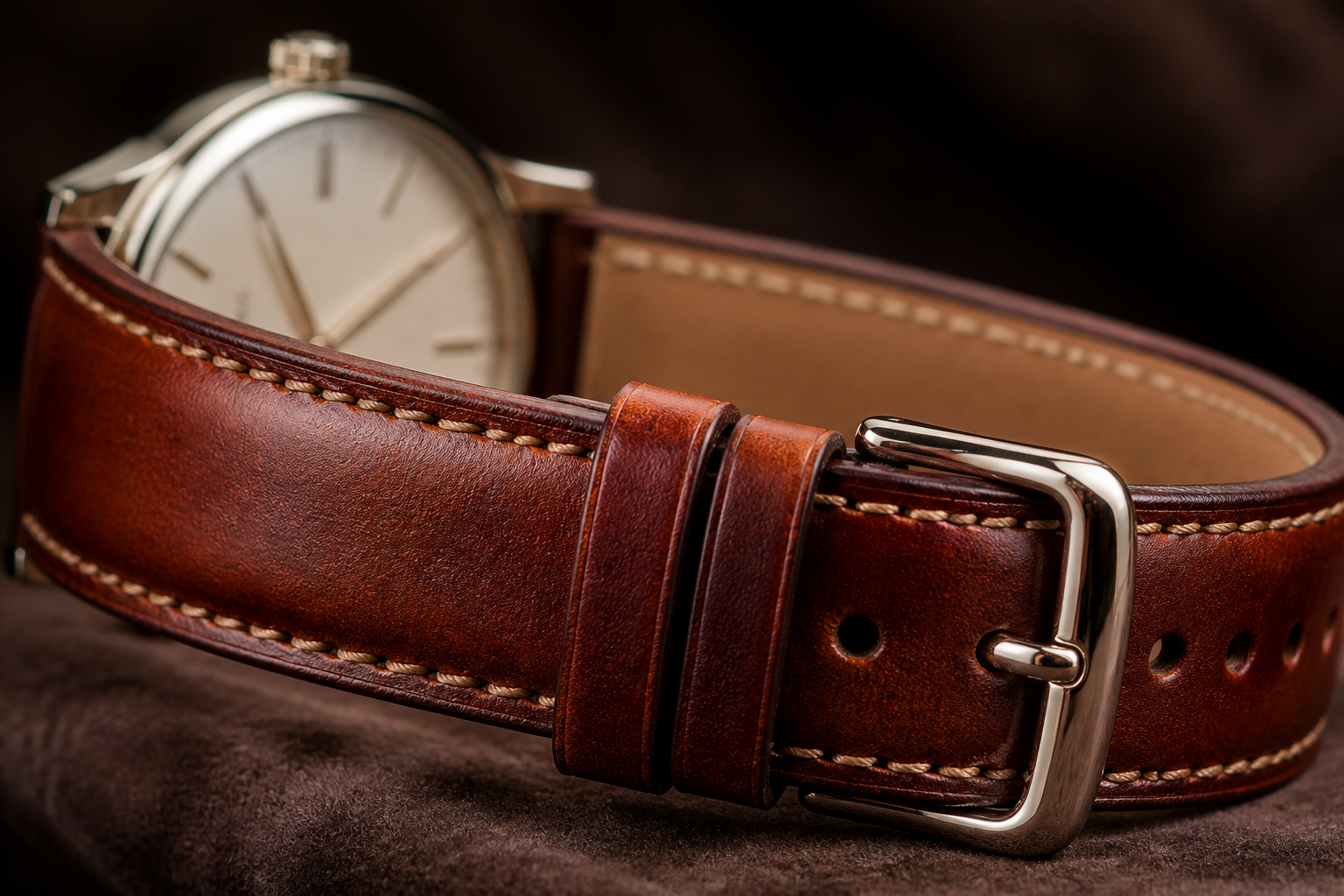
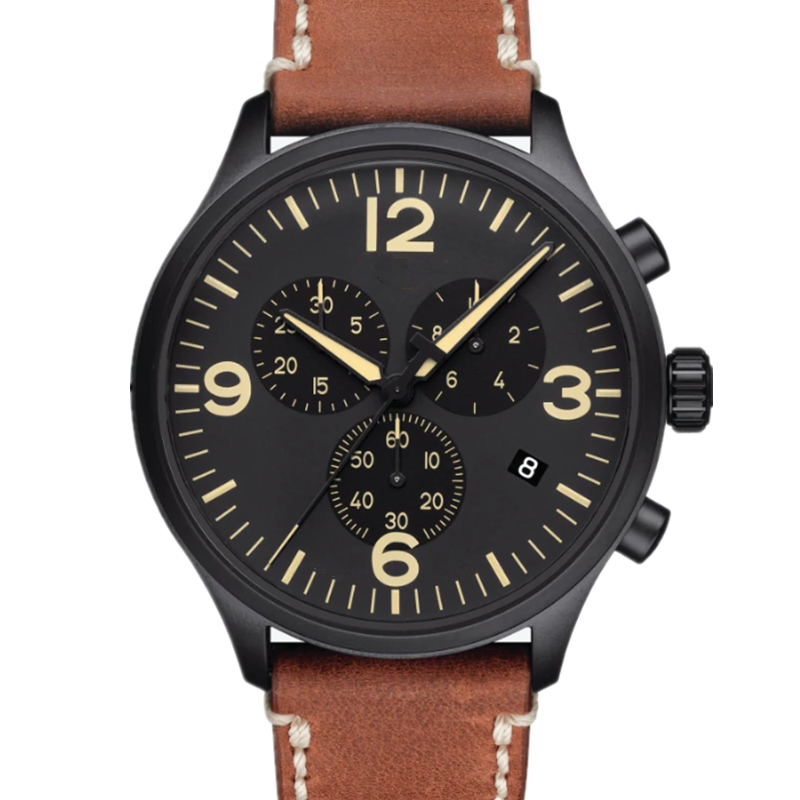
Then came 1904, and the story gets good. Brazilian aviation pioneer Alberto Santos-Dumont complained to Louis Cartier: pulling a pocket watch out of my pocket while flying a plane is a nightmare — it's simply impractical. Cartier's response was to design a way of fastening the timepiece to the wrist with a leather buckle. That became the Santos, later produced at scale — widely recognized as the first true men's wristwatch — and it came on a leather strap.
The significance of this cannot be overstated. Leather had been used before, but the Santos is the moment the very concept of the "wristwatch" was formally created. After the Santos entered mass production in 1911, wristwatches spread rapidly, and leather's position as the dominant strap material was established. Even early Rolex watches of that period were fitted with leather straps.
---
## 3. The Rise of Metal Bracelets: From Milanese Mesh to the Oyster (1910s–1970s)
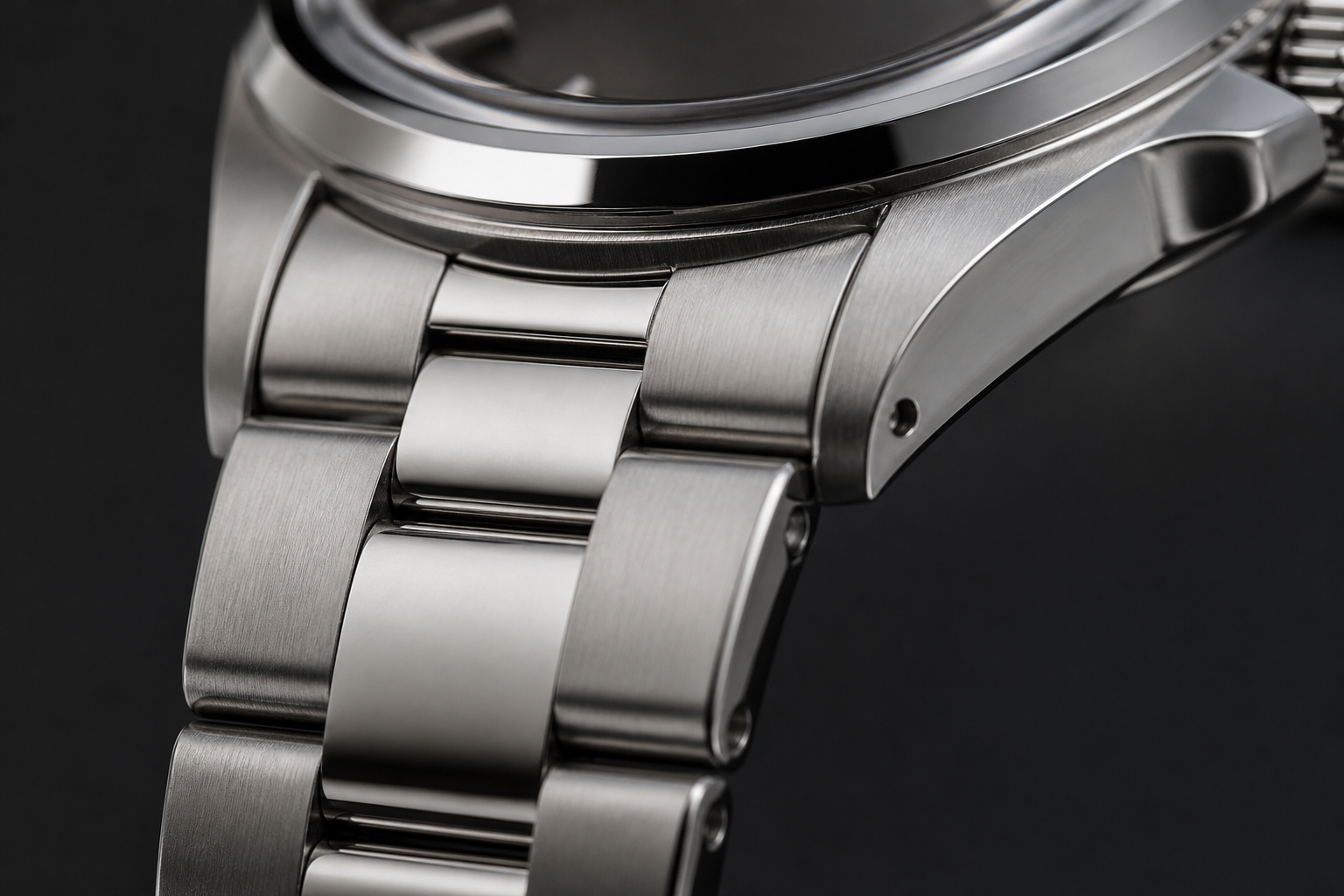
Metal had been used from the beginning, but it only became a systematized component in the early 20th century.
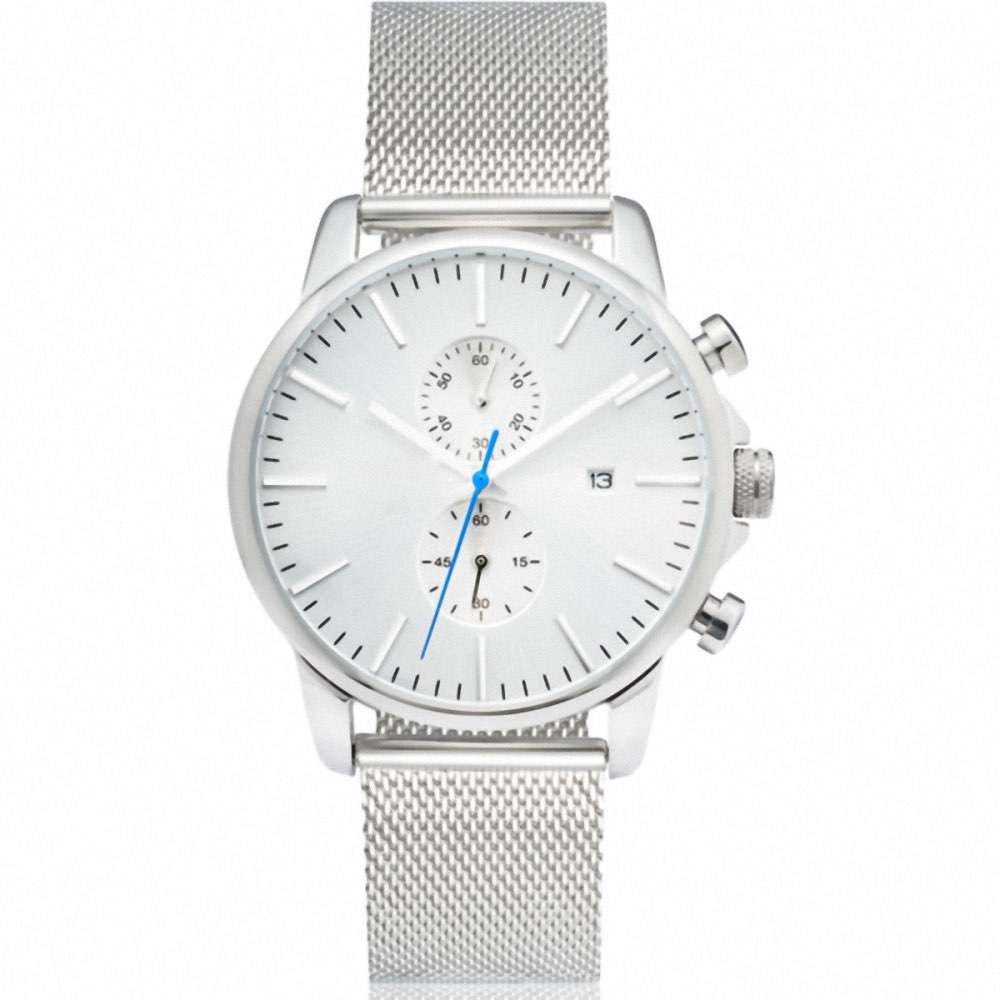
One very early type of metal strap was the **Milanese mesh bracelet**. The technique actually originated in mid-19th-century northern Italy, where it was first used to make women's bracelets. It was later adapted to watch straps — an extraordinarily complex process requiring as many as **85 separate steps**, including annealing, weaving, cutting, shaping, and welding. Note, though, that metal bracelets of this period were still largely decorative.
The real technical turning point arrived in the 1930s with the **Bonklip-style bracelet**: a stainless steel band formed of densely linked segments, shaped like a length of bamboo. Its breakthrough was that production costs were relatively controllable while the result was sturdy and dependable — and it was quickly adopted for military watches. In fact, the Bonklip design had a direct influence on the later, famous Oyster bracelet.
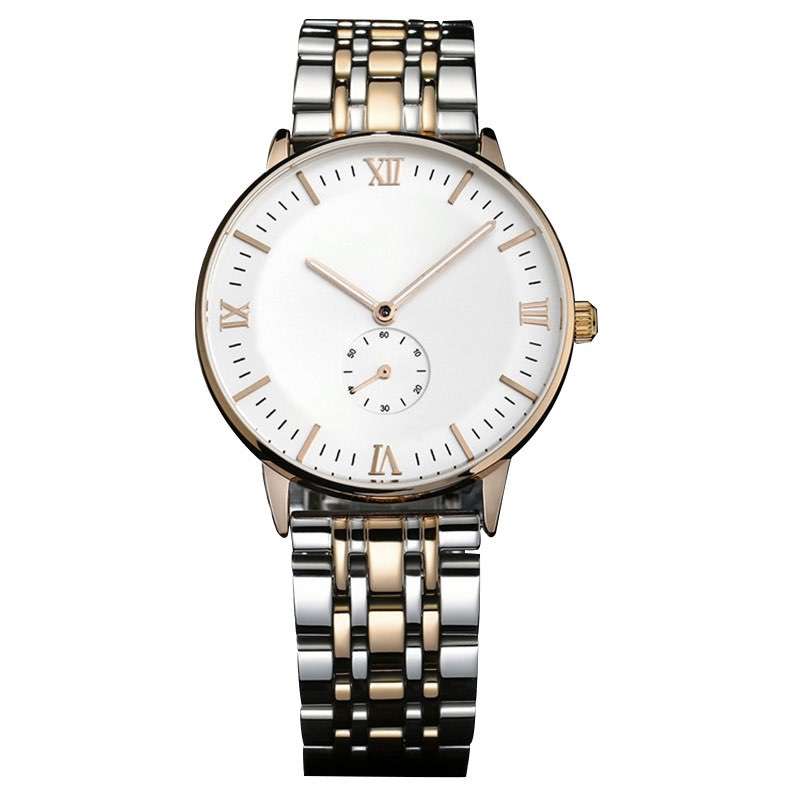
But the brand that truly elevated the metal bracelet was Rolex. In the late 1930s, Rolex introduced the **Oyster bracelet**, originally built specifically for tool watches and sports models: three-link construction, supremely robust and reliable. Then in 1945, when Rolex launched the Datejust, it designed the **Jubilee bracelet** specifically for it — the five-link design enthusiasts call the "five-bead" bracelet. Since then, classics such as the Oyster, Jubilee, and President bracelets have continued to evolve and improve.
And precisely because metal bracelets demand such a high level of craftsmanship, steel-bracelet models were actually far less common than leather before the 1960s — manufacturing costs were extremely high, sometimes accounting for **a third to half of a watch's entire cost**. To secure a stable supply, Rolex went so far as to acquire its long-time partner and renowned bracelet maker **Gay Frères** outright in 1998.
---
## 4. Canvas and Fabric Straps: The Pragmatism of War (WWII)

The Second World War gave rise to another legendary design — the **NATO strap**. The watches worn by British pilots and navigators of the time used wide straps made of canvas or leather, and for safety reasons they did not rely on removable spring bars; instead, the bars were welded in place to prevent the strap from coming loose. The strap length was freely adjustable — and it evolved into what we now know as the NATO nylon strap, a staple of today's vintage aesthetic. Put simply: without the battlefields of WWII, there would be no NATO trend as we know it.
---
## 5. Rubber Straps: From "Unacceptable" to Premium Standard (1950s–Present)
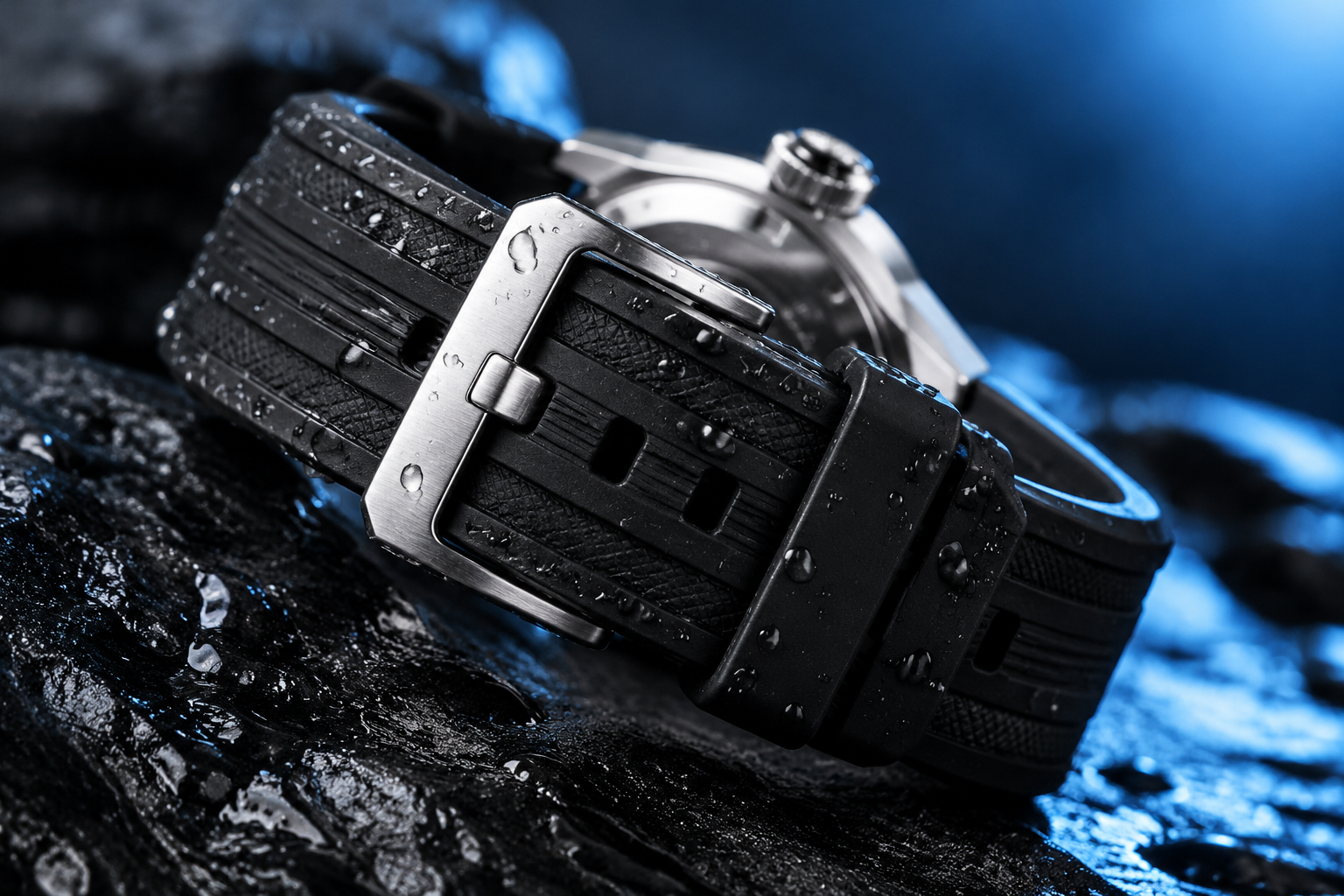
Rubber is a latecomer as a category, and its early reputation was poor — soft and coarse, prone to aging, and sticky against the skin.
The first genuinely functional product appeared in **1955**, when TROPIC launched the first widely successful vulcanized rubber strap: waterproof, sweat-proof, and affordable — a perfect match for dive watches. Yet at the time, rubber still held the status of "practical but not presentable" in watch circles.
The turning point came in **1980**, when Hublot boldly introduced a watch pairing a gold case with a natural rubber strap. At the time it was considered heresy — 18K gold with rubber? What serious luxury watch would dare? But that move opened the door to high-end sports watches and thoroughly overturned the old framework of luxury materials.
Since then, rubber straps have flourished across the board. The rubber straps you see on mid-to-high-end sports watches today are nothing like the simple material of decades past — **FKM fluoroelastomer**, **medical-grade silicone**, and more. Top-tier rubber straps are not only comfortable and durable; they can be produced with intricate patterns, colorways, and complex structures, and they resist chemicals, UV, and sweat corrosion. Performance, fully maxed out.
---
## So What's the Takeaway?
Looking back, the evolution of the watch strap is a microcosm of one simple force: human needs driving material progress.
That single band around your wrist today has passed through an aesthetic awakening — from cord to fine leather; through the engineering challenge of metal bracelets, from prohibitively expensive to mainstream; through the pragmatism of military canvas; and finally into modern materials like rubber that keep breaking the boundaries of imagination.
So — which one are you wearing today? Each of them has a story worth telling.
---
**A note on sourcing:** Brand references in this article are presented as historical and editorial record of the industry, and do not imply any affiliation or endorsement.

2F, Building A, Shimei Industrial Park, Dalang Town, Longhua District, Shenzhen, China